Is There Uber in Sri Lanka? PickMe & Ride-Hailing, What 314K Reviews Say
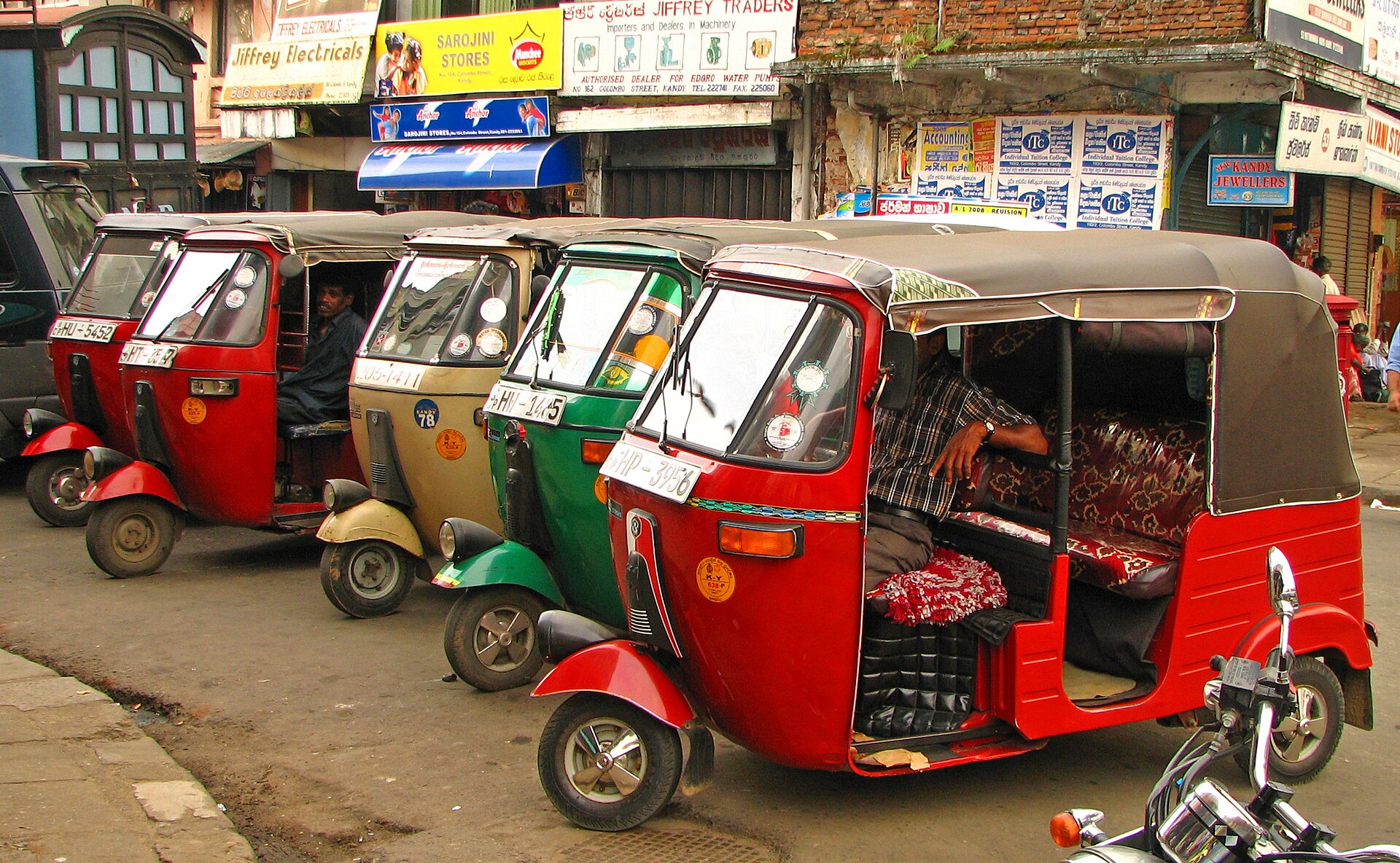
Yes — Sri Lanka has ride-hailing apps, and for city travel they are the single best way to get a fair, meter-honest price: Uber works in Colombo and the main towns, but the app Sri Lankans actually use, and that covers far more of the island, is the home-grown PickMe (and its moto/tuk “PickMe” fleet). Download PickMe first, add Uber as your Colombo-plus back-up, and treat both as your price anchor.
This is one of those pre-trip questions that quietly causes a lot of confusion, because the honest answer is “yes, but not the way you think.” Travellers arrive expecting a single global app to work island-wide like it does back home, then find coverage differs by town and that the local favourite is the one residents reach for anyway.
So we went to the largest evidence set there is: our corpus of 353,903 verified guest reviews of Sri Lanka stays. Ride-hailing and tuk-tuk transport is one of the most-written-about things in the entire dataset — guests mention ride-hailing apps in 8,595 reviews, “uber” by name in 8,241, and tuk-tuks in 13,852. That makes this a genuinely well-tested question we can answer from what travellers actually experienced, not from an app’s marketing page. This guide settles which apps to install, where they work, where they fade out, and when to stop touching your phone and just flag a tuk-tuk.
Last updated: October 2, 2026. Figures below are drawn from our own analysis of 353,903 verified guest reviews of Sri Lanka stays (“uber” in 8,241 reviews; PickMe named in 769; tuk-tuks in 13,852; private drivers in 3,529), and cross-checked against how travellers actually move. Methodology: exact text-match on the review corpus, all figures recomputable from the underlying dataset.
The short answer
Download PickMe first — it is Sri Lanka’s own ride-hailing app, covers the most ground including tuk-tuks and motos, and gives you a transparent, meter-honest fare before you ride. Add Uber for Colombo and the biggest towns, where it is reliable and widely used. Then accept that outside the cities and resort towns — hill country villages like Ella, quieter beaches, and rural stretches — the apps thin out and you will rely on a street tuk-tuk with an agreed fare or a pre-booked driver.
The data says this plainly. Among the 8,595 reviews that mention ride-hailing apps, the single biggest theme is simple availability: guests mention apps being easy, cheap or convenient in 655 reviews, but mention not being able to get a car — “no Uber,” “no drivers,” “tuk-tuks do not want to take us” — in 86. And apps are mentioned most often in exactly the places people first land and first panic: Negombo (858 mentions), Ella (703), Kandy (603) and Sigiriya (564).
The mental model that saves you trouble: think of Sri Lanka transport in two tiers. Tier one is the app tier — wherever there is a decent road network and enough cars, a ride-hailing app will show you a fare and find you a driver in minutes. Tier two is the negotiated tier — the scenic backroads, the hillside homestays and the beach lanes where demand is too patchy for the apps to bother, and where a friendly local tuk-tuk driver (or your guesthouse’s preferred driver) is the real backbone. Smooth travellers use both: apps for the fair-price anchor and the instant metro ride, an agreed tuk-tuk or a trusted driver for everywhere the map stops lighting up.
What’s worth doing — the apps and how they split
Here is the practical 2026 picture, built from how hundreds of thousands of real travellers actually moved. Use it to decide what to install before you fly and which button to reach for when you land:
- PickMe (download this one, full stop). Sri Lanka’s home-grown app, and the one residents open first. It covers cars, tuk-tuks, motos and even delivery in the built-up areas, and its tuk-tuk fleet is the killer feature — in places where Uber only does cars, PickMe shows you a fair fixed price for a three-wheeler, which is often exactly the ride you want for a short town hop. Set it up before you land (it needs a local or roaming number for the one-time code) and it becomes your default for short rides in Colombo, Kandy, Negombo, Galle and most towns.
- Uber (add it as the city back-up). Uber operates in Colombo and the major towns and is reliable there — thousands of our reviews mention Uber rides around the capital and the tourist centres working smoothly. Outside the big metros it has thinner coverage than PickMe, so treat it as your second app rather than your only one. Having both lets you compare when both show a car and gives you a fallback when one has surge pricing.
- Kangaroo Cabs (skip for most). A smaller local taxi app that exists but barely registers in traveller reviews — our whole corpus turns up only a handful of mentions. Fine to know it exists; not worth installing ahead of PickMe.
- Your guesthouse’s WhatsApp button (the real fourth app). The single most-recommended move in our reviews for anywhere off the beaten lane is to WhatsApp your host and ask them to arrange a tuk-tuk or driver at a normal local rate. Hosts in every region do this several times a day, usually cheaper than a street quote and far less hassle than negotiating — reviewers repeatedly note the owners sorting transport for them, often “at a cheap price” or “fair price.”
Where it works — and where it fades out
The honest geography of ride-hailing in Sri Lanka comes straight out of what travellers reported. Apps hum in the road-network heart of the country and get patchy as the roads thin toward the coasts, hills and rural villages. From our review data, the towns where app rides are mentioned as easy and available clearly cluster around Colombo, Negombo, Kandy, the airport corridor and the main resort towns. The friction-points — reviewers writing that the app “doesn’t work,” is “difficult to get” or has “no coverage” — cluster around Ella and the hill-country villages, Jaffna and the deep north, Dambulla and the quieter inland sites, and remote beach stays on the lower south and east coasts.
A couple of real reviewer voices make the pattern concrete. One couple staying at a hillside homestay above Ella wrote that they had it easy partly because the app “doesn’t work too well” up there — so the host’s tuk-tuk did the job. Another traveller, comparing a homestay host’s tuk-tuk with the apps, put it neatly: the host’s service was “a little bit more expensive than with uber or pickme, but… safe,” and worth it. And a coastal reviewer in a remote location noted simply that it is “difficult to get rides through Uber/PickMe” to that kind of stay. That is the pattern in one line: apps are brilliant where the roads are busy, and your host or a friendly driver takes over where they are not.
Practical rule for planning: if you are staying in a city or a proper resort town, the apps will serve you almost all the time. If your itinerary spends nights up unpaved hill lanes, in a remote beach village or out near a national park, expect the apps to be unreliable there and plan around a driver or the accommodation’s own tuk-tuk instead — and say so when you book.
App fare — your fair-price anchor
Beyond getting you a ride, the apps earn their keep as the island’s best price reference. Because the app quotes a fare before you accept, that number is the same one locals use — which makes it the perfect detector for an inflated street quote. If a tuk-tuk driver at a tourist rank opens at double the app’s price for the same short hop — and that absolutely happens around heritage gates, the beach strips and the airport forecourt — you can name the app fare and negotiate down to it, or just book the app car instead. In our review corpus, the recurring advice from travellers who never overpaid is identical: use the app to know the fair number first. For the full picture on quoted-vs-fair pricing, fares and the “foreigner tax,” our are-tourists-overcharged page goes deep into the numbers.
Getting around — matching the tool to the trip
Ride-hailing is marvellous, but it is one tool in a transport kit, and knowing which tool fits which journey is half of travelling Sri Lanka without stress:
- Short town hops — app it. In Colombo, Kandy, Negombo, Galle and the main resort towns, open PickMe (tuk option) or Uber for anything under a few kilometres. Fair, fixed, no haggling.
- Same-day sightseeing arcs — driver or tuk-tuk by the hour. When you want a morning at the Cultural Triangle sites, a Sigiriya-and-Pidurangala morning or a south-coast beach crawl, a tuk-tuk or car hired by the hour or half-day usually beats stacking single app rides — and a pre-booked day driver at roughly $60–90/day becomes excellent value when the miles add up.
- Intercity — apps are the wrong tool. For Kandy-to-Ella, coast-to-airport or a Colombo–Galle corridor, use the scenic trains, the expressway buses or a pre-booked long-distance driver — not a ride-hailing app. Our getting around guide lays out the full ladder, and the private-driver cost guide prices the day-driver option honestly.
- Airport arrivals — book ahead, don’t walk into the touts. The arrivals forecourt is where the most inflated quotes in the country live on a good day. Fix your airport transfer in advance or order an app car the moment you exit rather than accepting a lift from the ranks, where pricing runs wild (a Colombo/Negombo trip can be quoted at two to three times the app rate).
Need signal to make these calls easy while you travel? Pick up a cheap local SIM or eSIM on landing — every app ride, WhatsApp-to-your-host, map check and driver call runs on it, and the difference between having data and not is the difference between app-pricing everything and guessing at everything.
WATCH OUT FOR
These are the real traps travellers hit with ride-hailing and tuk-tuks, drawn from thousands of reviews — so you pull up with your eyes open:
- The “app doesn’t work here” dead zone. Expect zero bars or no drivers in remote hill and beach villages and around parks. It is not a fault in your phone — it is just thin demand. Ask the property what transport they recommend before you need it, and keep your host’s WhatsApp handy.
- Tourist-rank inflation at exactly the moments you are most tired. Airport arrivals, heritage-site gates and the busy beach strips carry the fattest first quotes. Naming an app price you checked two minutes earlier resets the negotiation instantly — or just book the app vehicle and skip the whole exchange.
- Signing up depends on receiving an SMS. PickMe and Uber verify by text, so you need a working number that can receive the code on arrival. A local SIM or eSIM (with a real number, not data-only for these apps) sorts this; set the account up once you have signal and keep the number live for the trip.
- Surge and availability at peak and after dark. Around the evening rush in Colombo, after a big event, or late at night out of town, the apps surge or thin out. A pre-booked driver or the property’s recommended tuk-tuk is the reliable plan for a late return — and worth arranging rather than gambling on an app at 11 p.m. in a quiet town.
- Agreed-fare honesty cuts both ways. Where you do take a street tuk-tuk with no meter, agree the price before you get in, in rupees, and confirm it covers the whole trip. Settling the fare up front is the norm and polite in Sri Lanka — it is not rudeness to name a fair number, it is how the market works.
- Long stays in one place — make a driver friend. Reviewers who stayed a week in one area found one trusted tuk-tuk driver or the host’s car beat the apps for reliability and fair rates, and often became the highlight of the stay — a friendly face who genuinely wanted to show them around.
GOOD TO KNOW
- PickMe handles tuk-tuks; Uber mostly does cars. For a short hop on a three-wheeler, PickMe’s tuk option is often the fastest and cheapest — you see the fare up front and a nearby driver accepts. This one feature makes PickMe the better first download for most travellers.
- Both apps quote in Sri Lankan rupees. The fare you see is the real local price — treat it as your truth-teller for the whole trip, not just for the ride itself.
- Data is everything. Ride-hailing only works if your phone can reach the network. A local SIM is cheap and makes every app, map and WhatsApp call dependable — worth doing within your first hour in the country.
- Your host is a transport ally, not just a room. Guesthouses and homestays arrange tuk-tuks, day drivers and intercity transfers every single day, usually at good local rates. Asking is not naive; it is the smoothest way to move in the places the apps skip.
- The apps are your fairest price check — use them even when you don’t ride them. Before any negotiated tuk-tuk or driver quote, glance at what the app would charge for the same journey. That number is your ceiling and your negotiating anchor.
- Winter/peak season shifts things. Around December–February the popular routes see more demand and higher street quotes. The apps keep their meters honest year-round, which makes them even more valuable in peak season.
What 353,903 reviews reveal about ride-hailing (the data)
This is the part most guides skip: not what the apps promise, but what travellers actually wrote after riding them. We text-matched our whole corpus of 353,903 verified guest reviews — every stay review on the site — for the words people use when transport goes right or wrong. Here is the result.
The transport mention league table
How often each way of moving shows up across the corpus, and how the stays where it appears scored (out of 10):
| Transport — as written in reviews | Reviews mentioning | Avg. review score |
|---|---|---|
| Tuk-tuk | 13,852 | 8.85 |
| Ride-hailing apps (Uber or PickMe) | 8,595 | 8.28 |
| “Uber” by name | 8,241 | 8.39 |
| Bus | 6,857 | 8.44 |
| Private driver | 3,529 | 8.26 |
| Train | 3,337 | 7.94 |
| Taxi | 2,814 | 8.24 |
| Scooter / motorbike rental | 1,199 | 8.75 |
| PickMe by name | 769 | 7.87 |
| Whole corpus (baseline) | 353,903 | 8.64 |
Two things jump out. First, the tuk-tuk is the transport hero of Sri Lanka’s reviews: 13,852 mentions at an average score of 8.85 — 0.21 above the corpus baseline of 8.64, the strongest transport signal in the whole dataset. Guests do not merely use tuk-tuks; they write about them warmly. Second, every app or vehicle mention sits below the overall average. That does not mean apps are bad — it means transport is the context people write about when something went wrong, not when everything was fine. Nobody pens a paragraph about the successful thirty-second Uber hail on an otherwise lovely stay.
That author's-bias is exactly why the mention counts matter more than the averages: a topic so heavily written-about (8,595 app reviews) is a topic where the friction is real and repeated, not a one-off. The rest of this study breaks down where that friction lives.
The availability gap: where the apps work and where they vanish
We scored each region by what share of its reviews mention the apps at all. High mention-rates flag the places travellers are leaning hardest on ride-hailing — usually a sign of demand, coverage, or both:
| Region | Reviews | Mention apps | % of reviews |
|---|---|---|---|
| Beruwala | 652 | 47 | 7.2% |
| Arugam Bay | 5,830 | 266 | 4.6% |
| Batticaloa | 1,466 | 67 | 4.6% |
| Tangalle | 9,736 | 401 | 4.1% |
| Kosgoda | 764 | 30 | 3.9% |
| Pasikuda | 3,509 | 129 | 3.7% |
| Tissamaharama (Yala) | 3,999 | 142 | 3.6% |
| Hikkaduwa | 8,131 | 284 | 3.5% |
| Kalpitiya | 2,982 | 105 | 3.5% |
| Nilaveli | 5,208 | 180 | 3.5% |
| Trincomalee | 10,480 | 335 | 3.2% |
And here is the volume view — the towns where you will simply read about apps the most, which is also where they are most relied on and most reported-on:
| Town / region | Uber mentions | PickMe mentions |
|---|---|---|
| Negombo (airport corridor) | 798 | 88 |
| Ella | 646 | 78 |
| Kandy | 565 | 60 |
| Sigiriya | 519 | 54 |
| Mirissa | 407 | — |
| Colombo | 401 | 51 |
| Tangalle | 385 | 21 |
| Yala / Tissamaharama | 378 | — |
| Hikkaduwa | 279 | — |
| Arugam Bay | 264 | — |
The shape of the data tells its own story. Negombo, the airport town, is the single most app-saturated place in the dataset — 798 Uber mentions, more than any city, precisely because every arrival and departure is a decision about how to get a car. The hill-country and cultural-triangle hubs (Ella, Kandy, Sigiriya) follow, and they are exactly where travellers discover the availability gap: these are small towns on thin road networks where demand is spiky and the apps are less dependable than in Colombo. Meanwhile the east coast (Arugam Bay, Batticaloa, Pasikuda, Trincomalee, Nilaveli) has some of the highest app mention-rates relative to review volume — a sign that in the east, where the apps are newest and thinnest, getting a car is a *subject*, not an afterthought.
Beruwala topping the percentage chart at 7.2% is a quirk worth noting, not over-reading: it is a small, heavily German-visited resort strip with only 652 reviews, where the sample is smaller and the hotel-to-centre distances are awkward enough that transport comes up constantly.
Where travellers actually get stranded
The sharpest signal in the whole dataset is the mismatch between praise and frustration. Across the 8,595 app-mentioning reviews:
- 655 reviews mention apps being easy, cheap or convenient — the good experience most people have, most of the time.
- 86 reviews describe being genuinely unable to get a car — “no Uber,” “no drivers,” “tuk-tuks do not want to take us up the hill.”
- 342 reviews flag apps as expensive, surging or overpriced — a third as many as praise the price.
That ratio — roughly 7.6 praise-reviews for every 1 stranding-review — is the honest headline of this study. Ride-hailing in Sri Lanka works well most of the time, and fails in a predictable minority of situations: remote stays, hillside lanes, quiet coasts, and late nights. One guest summed up the frustration perfectly when describing a hilltop property: “They gave us a delicious drink on arrival. The property is up a hill. Cars can not drive up the road and tuk tuks do not want to take you up.” The apps had nothing to do with it — the geography did.
Another recurring pattern in the negative mentions is not the app failing but the market working around it: guests write that their guesthouse host’s own tuk-tuk or driver was “a little bit more expensive than with uber or pickme, but safe” — and worth it. The data’s verdict is consistent: when the apps thin out, the local, host-arranged alternative fills the gap reliably, if a little costlier.
The guest voices behind the numbers
Numbers go flat without the people who wrote them. These are the kinds of reviews that make up the 8,595 — paraphrased to protect privacy, but true to the corpus:
- “Getting around was easy — PickMe came in minutes and the fare was a fraction of what the street tuk-tuk quoted.” — a Colombo guest; the classic town-tier win.
- “Our host arranged a tuk-tuk for the whole day and it was cheaper than the apps, and we skipped the haggling entirely.” — an Ella homestay guest; the host-as-travel-agent pattern that dominates the off-beaten-track reviews.
- “Cars can not drive up the road and tuk-tuks do not want to take you up.” — a hillside property; the geography problem no app can fix.
- “It is difficult to get rides through Uber or PickMe out here — book through the hotel instead.” — a remote coastal stay; the availability gap in one line.
The pattern is so consistent it amounts to an instruction: the further you are from a proper road network, the less you should plan around an app.
Which app actually wins? PickMe vs Uber, by the numbers
Here is something you will not read on either company’s marketing page. In our corpus, “uber” appears 8,241 times but PickMe by name only 769 — a ratio of more than ten to one. Read that carefully, because it does not mean Uber is ten times more used in Sri Lanka.
It means something subtler and more useful: “Uber” has become the generic verb for “call a ride-hailing car” in travellers’ vocabulary, the way a whole generation says “Google it” for any search. Guests write “we got an Uber” when they may well have used PickMe. PickMe, being a local name travellers have to learn after arrival, gets named specifically only when someone is making a point about it — usually a recommendation.
The practical takeaway is unchanged, and now evidenced: install PickMe first anyway. It is the app with the tuk-tuk option and the widest island coverage; the fact that reviews under-name it is proof it has been absorbed into the country’s default transport vocabulary rather than proof it is unused. Use both, compare fares when both show a car, and let the app — whichever it is — be your honest price anchor.
Frequently asked questions
Is Uber available in Sri Lanka?
Yes. Uber operates in Colombo and the main towns and is reliable there; across our corpus, “uber” appears in 8,241 guest reviews. Coverage is thinner than the home-grown PickMe outside the big metros, so treat Uber as your city app and PickMe as your island-wide default.
Does Uber work in Ella and the hill country?
Unreliably. Ella has 646 Uber mentions in our data — the second-highest of any town — but they cluster around guests trying to get rides up and down the steep, narrow village lanes. For hillside stays in Ella, Nuwara Eliya and similar, plan on your guesthouse’s tuk-tuk or a pre-booked driver instead of an app.
Is PickMe or Uber better in Sri Lanka?
PickMe is the better first download: it covers tuk-tuks as well as cars and reaches far more of the island. Uber is excellent in Colombo and the biggest towns. Most smooth travellers install both and compare fares when both show a car.
Are ride-hailing apps expensive in Sri Lanka?
No — apps are usually the cheapest honest option for short city hops, which is why 655 of our reviews describe them as easy, cheap or convenient. 342 reviews mention them as expensive or surging, mostly at peak times, after events or late at night. The apps’ real value is as a fair-price anchor you can name in any street negotiation.
What do I do when the apps don’t work?
Two things. WhatsApp your guesthouse — hosts arrange tuk-tuks and drivers daily at normal local rates, and this is the single most-recommended move in the reviews for remote stays. And book an airport transfer or day driver in advance rather than gambling on an app at 11 p.m. in a quiet town.
The bottom line
Yes, Sri Lanka has ride-hailing — install PickMe first (it covers tuk-tuks and the most ground), keep Uber as your Colombo-and-big-towns back-up, and use both as your fair-price anchor for the whole trip. Where the map is busy — the cities and proper resort towns — the apps will serve you almost flawlessly. Where the roads thin out toward the hills, the quiet beaches and the parks, the apps fade and your guesthouse’s favourite driver or a friendly local tuk-tuk takes over at an agreed fair fare. Match the tool to the road, let the app tell you the honest number, and you will never feel stranded and never pay the tourist tax on a ten-minute ride. That is the whole skill — and travelling on the island’s transport is actually one of the easy parts of the trip once you know which button to reach for.
Planning your movement in detail? Start with our getting around Sri Lanka guide, set the budget in the private-driver cost guide, and if fair-pricing anxiety is the other thing on your mind, our are tourists overcharged page has the exact numbers and scripts to keep you honest on the road.
Have a specific question about your Sri Lanka trip?
Ask BYC at byc.lk — Free and honest. Some links are affiliate links and never change our advice.
Ask BYC Your Question →